ART Lab Represents at the 2026 ITPT Research Retreat
On May 19, the ART Lab joined colleagues from across UW–Madison for the 2026 Research Retreat of the Initiative for Theranostics and Particle Therapy (ITPT), an afternoon at the Health Sciences Learning Center dedicated to the science connecting radiopharmaceutical therapy, particle therapy, and everything in between. Four of us took the podium.
In the main session, Reinier Hernandez presented our work on the discovery and development of potent, selective CA9 theranostic radioligands, targeting carbonic anhydrase IX, a marker richly expressed in clear cell renal cell carcinoma, to pair imaging and therapy in a single agent. Reinier later co-moderated the Novel Therapeutics breakout alongside Jamey Weichert.
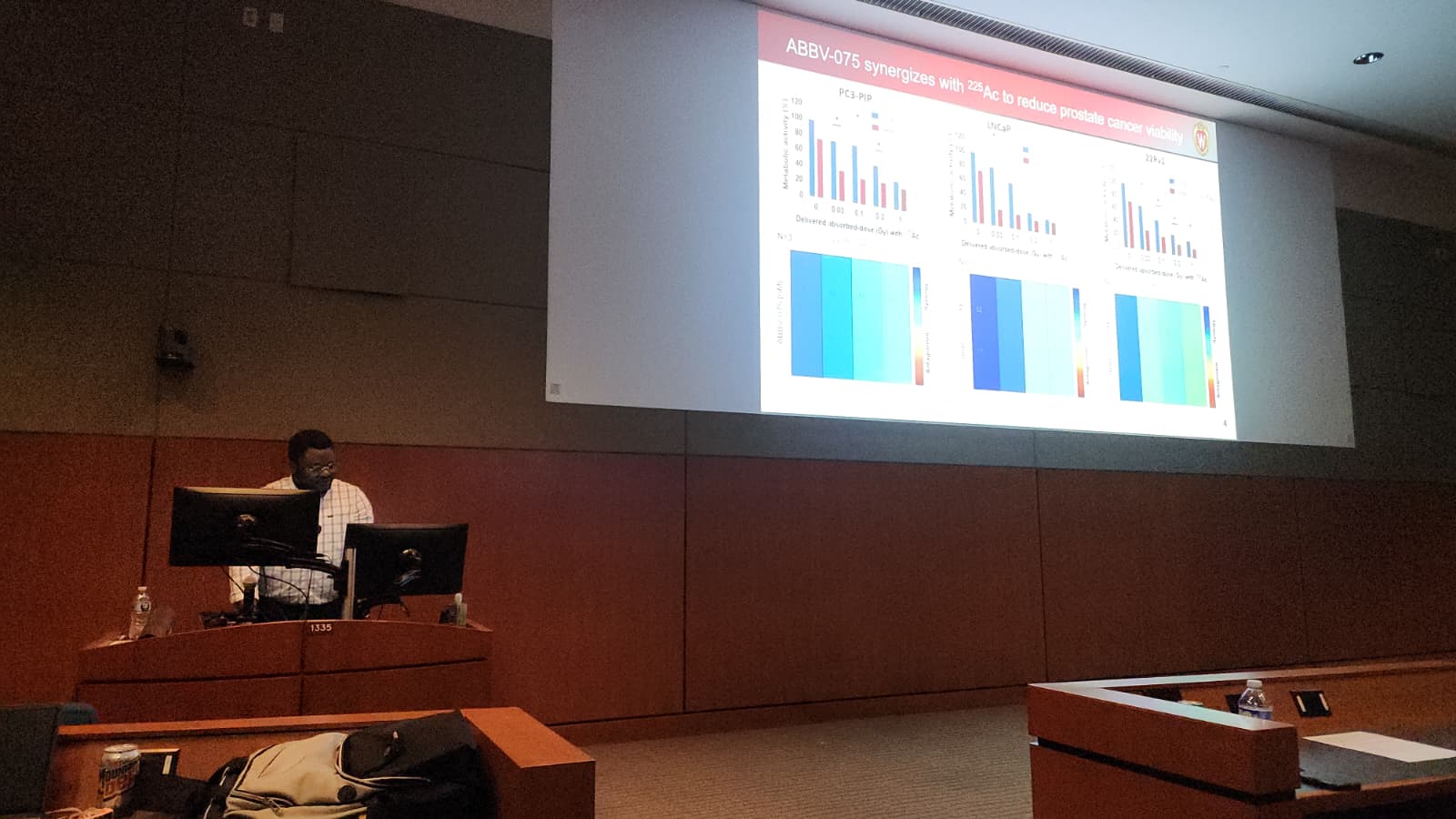
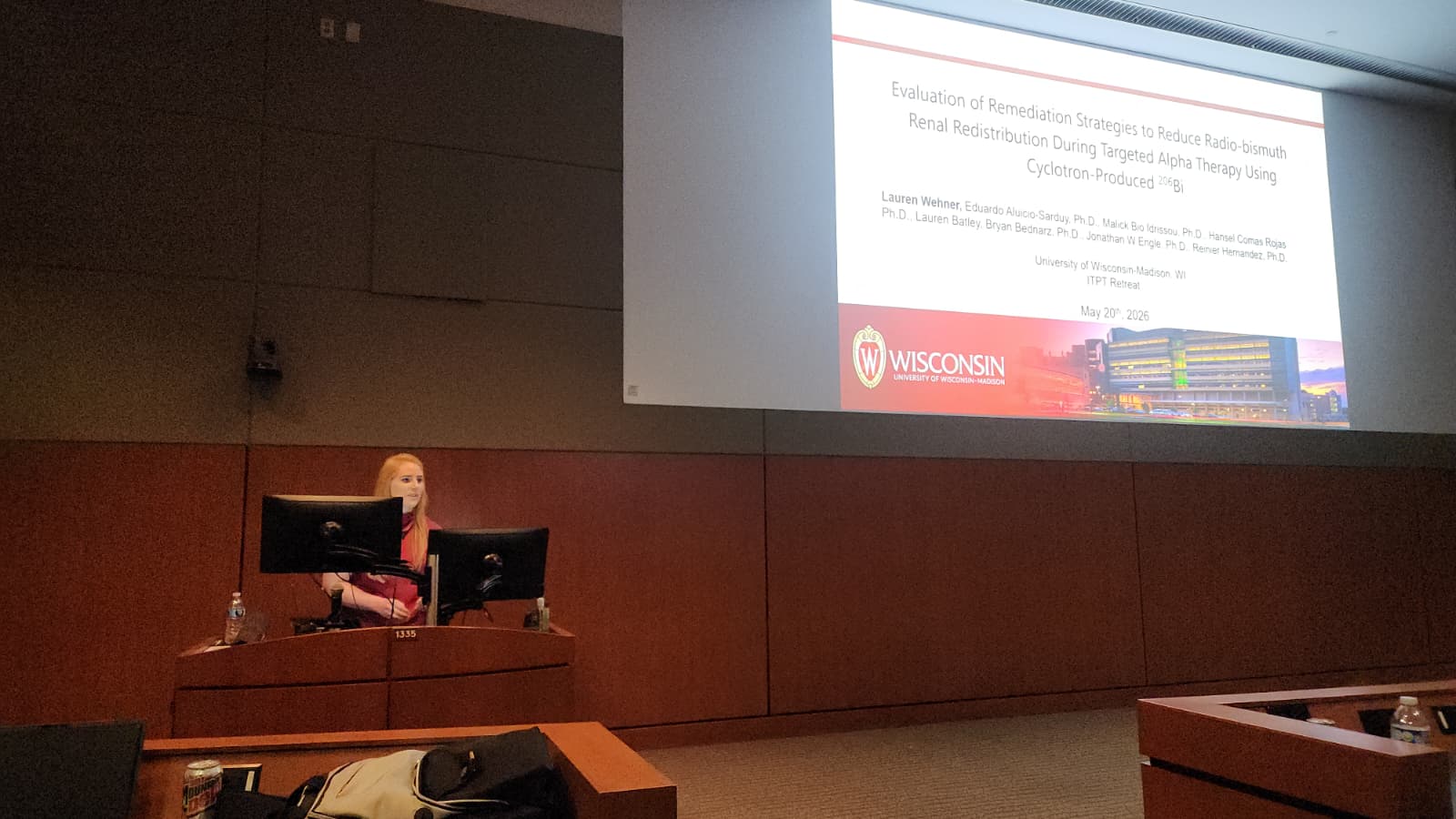
That breakout featured two more of our members. Malick Bio Idrissou spoke on BRD4 targeting in alpha therapy, building on his work pushing alpha-emitting radiopharmaceuticals toward harder-to-treat disease. Lauren Wehner introduced a cyclotron-produced Bismuth-206 tracer aimed squarely at the daughter redistribution problem in actinium-225 therapy. As a positron emitter that mirrors bismuth chemistry, Bi-206 makes that journey visible on PET, turning a long-standing dosimetry and toxicity headache into something we can actually image.
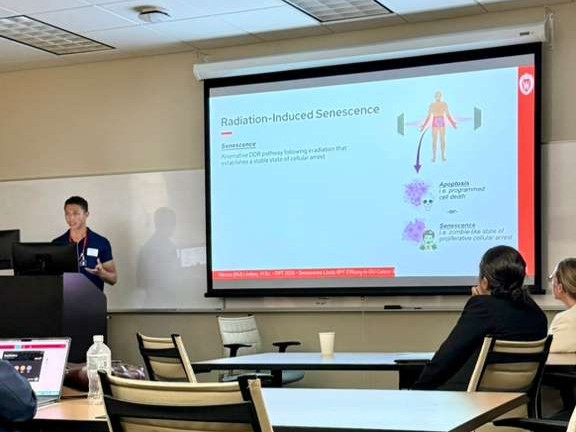
Over in the Resistance Mechanisms & Biomarkers session, Marcus (MJ) Lindsey presented on radiation-induced senescence in RPT, examining how the senescent cell state shapes tumor response to radiopharmaceutical therapy and how it might be exploited to make treatment more durable.
From tracer discovery to radiation biology, the retreat was a nice snapshot of the full pipeline the lab works across, and a great chance to trade ideas with the wider theranostics community here at UW.