Molecular Imaging
Synthesis of aldehyde reactive bifunctional chelators for glycoconjugation to living cells
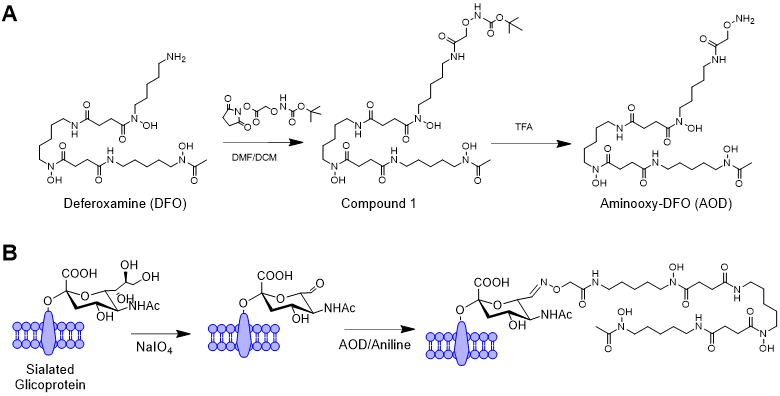
The efficient tracking of therapeutic cells in vivo using nuclear medicine technology has been hampered by the inability of current radiolabeling methods to incorporate PET and SPECT radionuclides into cells stably. In this project, I synthesized a series of aldehyde-reactive aminooxy-bifunctional chelators to enable conjugation and radiolabeling of cells for PET and SPECT tracking. The figure below shows the general procedure for our glycoconjugation of chelators. Our patented method has the potential to be implemented with a diversity of radiolabels and cell types, as well as with exosomes and other cell membrane derivatives.


In vivo cell tracking of therapeutic cells by PET/CT
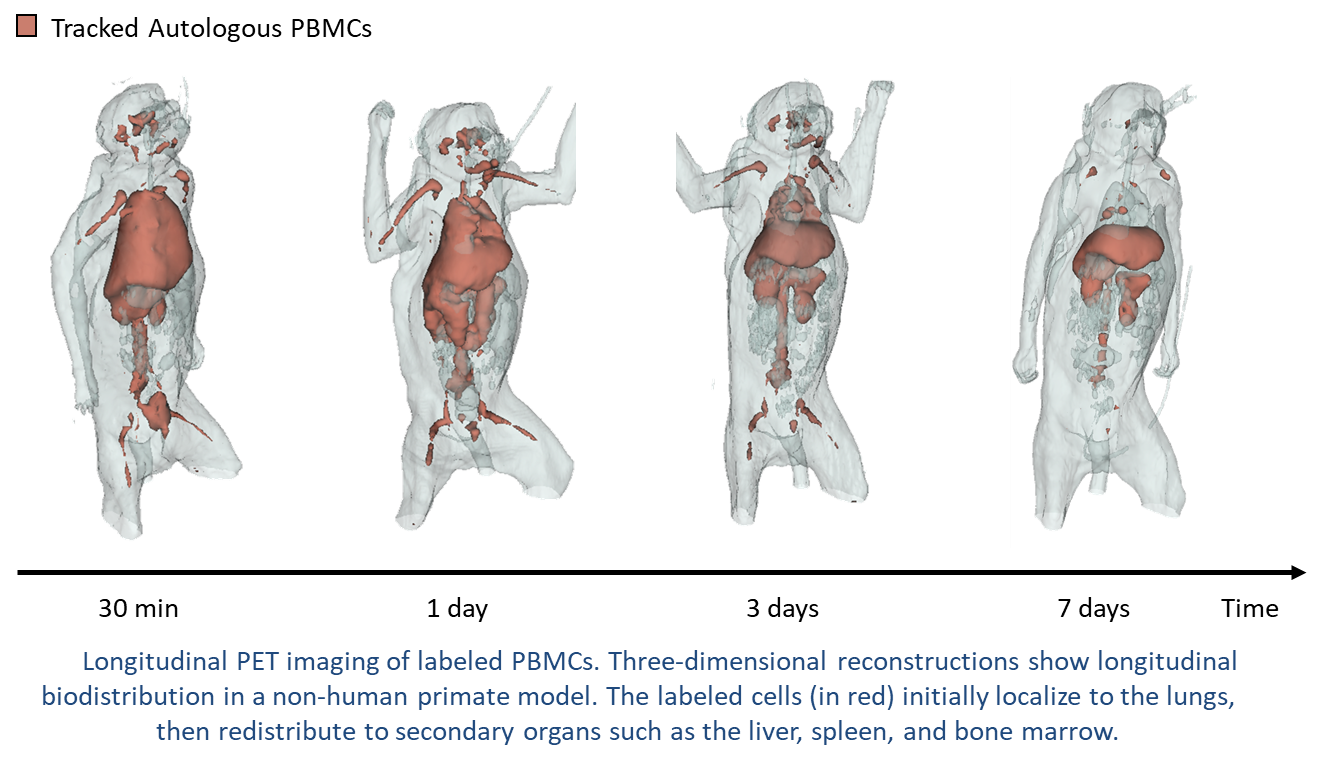
Cell therapies are increasingly recognized for their potential to transform cancer treatment, but their development has been hindered by the lack of tools to directly observe cell behavior in vivo. In this work, quantitative imaging methods are being developed to enable real-time tracking and dosimetry of therapeutic cells. Radiolabeling techniques are applied to visualize cell trafficking, persistence, and targeting through PET imaging, allowing data continuity between preclinical and clinical studies. Through these efforts, predictive image-based biomarkers are being generated to inform dosing, efficacy, and safety of emerging cell therapy products. The translation of this technology toward clinical and commercial use is being facilitated in collaboration with the Wisconsin Alumni Research Foundation (WARF) and industry partners.




Development of a PET reporter system for longitudinal tracking of CAR T cells
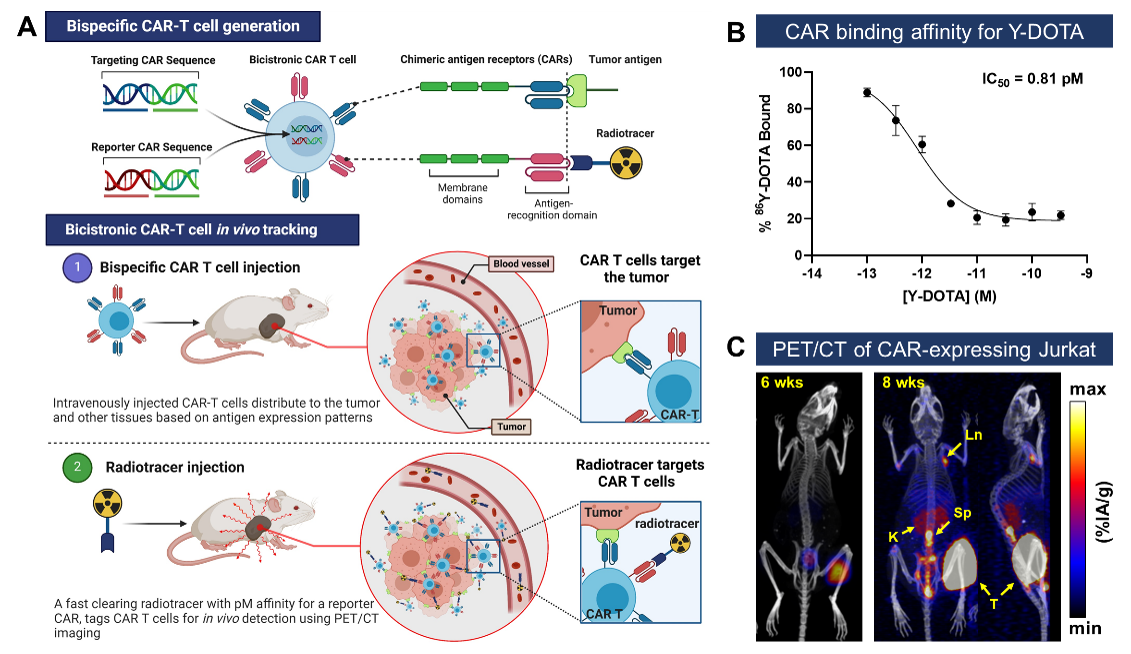
C825 is a bispecific antibody that has been shown to bind the colon cancer tumor antigen GPA33 and the chelator 1,4,7,10-tetraazacyclododecane-N,N’,N’’,N’’’tetraacetic acid (DOTA), complexed with yttrium (Y-DOTA), with a low picomolar affinity (10-20 pM). To develop a bispecific CAR-T cell expressing a high-affinity reporter CAR binding Y-DOTA, we inserted C825’s DOTA-binding scFv gene sequence into the ectodomain portion of a 3rd generation CAR construct that also targets disialoganglioside (GD2), a tumor antigen expressed on neuroblastoma. We then cloned the GD2/Y-DOTA bispecific CAR plasmids into either retroviral or lentiviral expression vectors for transduction of Jurkat T-cells. Two CAR expression cassettes were designed, having the DOTA and GD2 scFvs in tandem or as a bicistronic construct where each scFv is membrane-expressed independently (reference). Using flow cytometry and radioactive cell binding assays, we determined expression of the bicistronic CAR and confirmed its high affinity (0.8 pM) for DOTA radiolabeled with the positron-emitting 86Y . Subsequently, we tested the ability of the radiotracer 86Y-DOTA to bind CAR-expressing Jurkat cells in vivo by PET/CT. Mice bearing subcutaneous CAR-positive Jurkat showed marked 86Y-DOTA tumor uptake and fast clearance from normal tissue. Strikingly, 86Y-DOTA PET/CT at week 6 or week 8 after tumor implantation detected the metastatic spread of Jurkat tumors to the spine and lymph nodes, demonstrating the ability of our novel Y-DOTA reporter system to detect small cell clusters with exquisite sensitivity.